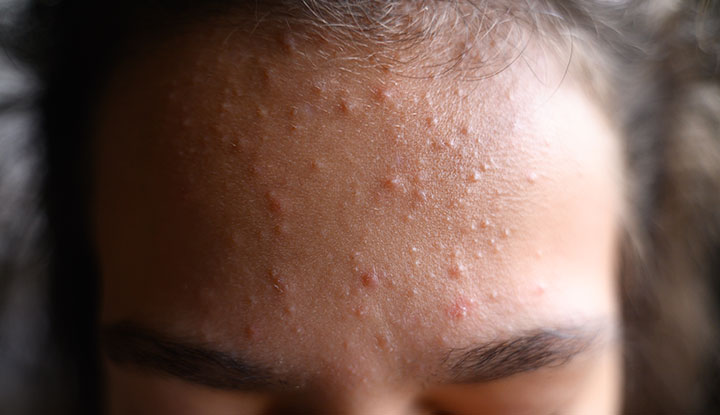
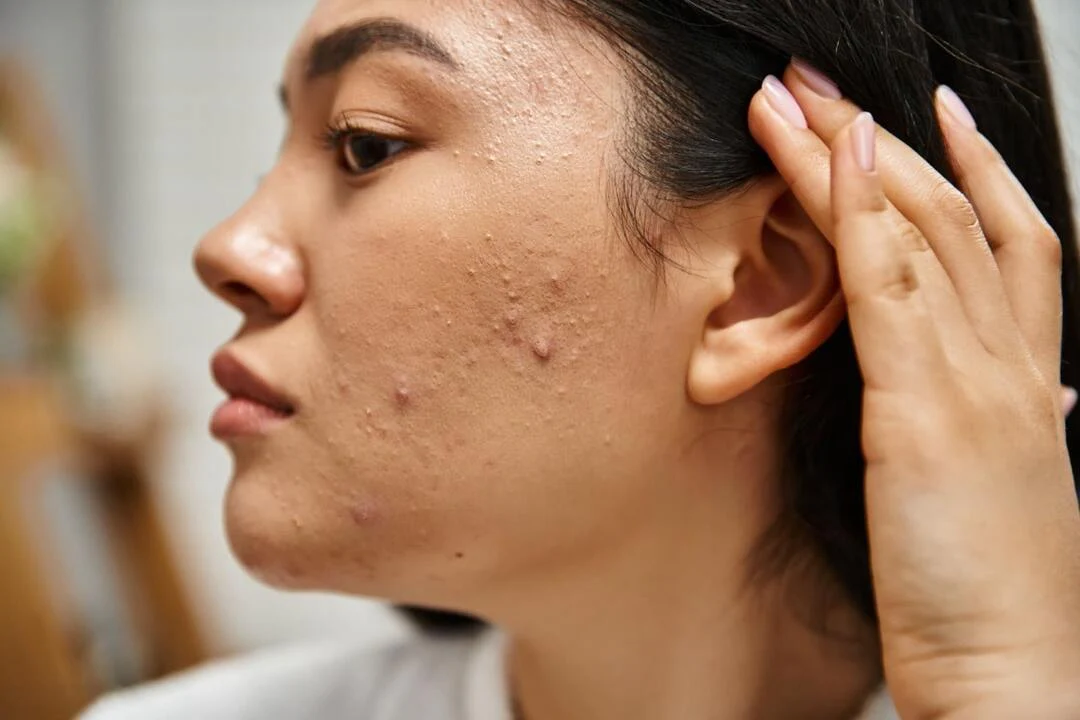
Closed comedones—the small, flesh-coloured or white bumps under the skin that create a rough, uneven texture—are one of the most frustrating skin problems to treat. They don’t look like angry pimples and they don’t respond to spot treatments. Learning how to get rid of closed comedones usually involves using chemical exfoliants like salicylic acid or retinoids to clear the trapped sebum and skin cells.
The most effective treatment for closed comedones is consistent use of a topical retinoid (tretinoin or adapalene), combined with regular chemical exfoliation using salicylic acid or glycolic acid. This combination normalises skin cell turnover and prevents the pore-clogging that creates them.
What Closed Comedones Actually Are
A closed comedo forms when a hair follicle becomes plugged with dead skin cells and sebum – but, unlike a blackhead, the pore opening remains covered by a thin layer of skin. Because there’s no air contact, the plug doesn’t oxidise, so it stays white or skin-coloured.
They’re most common on the forehead, chin, cheeks, and jawline – areas with higher sebaceous gland density.
Step-by-Step Treatment Plan
Step 1 – Introduce Salicylic Acid (Week 1-4)
Salicylic acid (BHA) is oil-soluble, meaning it can penetrate into the pore to exfoliate from the inside. This is the key property that makes it effective for closed comedones where other exfoliants can’t reach.
What to use:
- 2% salicylic acid toner or serum
- Apply once daily (evening) on clean skin
- Products: Paula’s Choice BHA Liquid, The Ordinary Salicylic Acid 2% Solution
Allow 4 weeks before expecting visible improvement.
Step 2 – Add a Retinoid (Week 4-8 Onward)
Retinoids are the gold standard for comedonal acne. They work by:
- Increasing skin cell turnover – preventing dead cells from accumulating and clogging pores
- Normalising sebum production over time
- Preventing new comedones from forming
Options by strength:
- Adapalene 0.1% (Differin) – OTC in many countries; well-tolerated starting point
- Tretinoin 0.025-0.05% – prescription; more potent; faster results
- Retinol – OTC; milder; slower but lower irritation
How to introduce:
- Start 2-3 nights per week for the first 2-4 weeks
- Increase to nightly once tolerated
- Apply pea-sized amount to entire face (not just spots) on clean, dry skin
Step 3 – Use a Gentle, Non-Comedogenic Cleanser (Daily)
A foaming or gel cleanser with minimal ingredients removes excess sebum without stripping the skin barrier. Avoid heavy cream cleansers with comedogenic oils.
Good options: CeraVe Foaming Cleanser, La Roche-Posay Effaclar Purifying Foaming Gel.
Step 4 – Audit Your Products for Comedogenic Ingredients
Some products directly cause closed comedones in acne-prone skin. Check all moisturisers, sunscreens, and makeup:
| Commonly Comedogenic Ingredients | Safer Alternatives |
|---|---|
| Coconut oil | Squalane, niacinamide serum |
| Isopropyl myristate | Lightweight gel moisturisers |
| Lanolin | Hyaluronic acid-based moisturisers |
| Algae extracts (some) | Check formulation |
| Heavy silicones (cyclomethicone) | Non-silicone formulations |
Step 5 – Moisturise and Use SPF
Retinoids increase sun sensitivity and can cause dryness:
- Use a non-comedogenic moisturiser daily (Cerave PM, Neutrogena Hydro Boost)
- Apply SPF 30-50 every morning – this is non-negotiable with retinoid use
What NOT to Do
| Mistake | Why to Avoid |
|---|---|
| Squeezing or picking closed comedones | Causes inflammation, scarring, and can turn a comedo into a cyst |
| Harsh scrubs or abrasive cleansing tools | Disrupts the skin barrier without clearing pores |
| Over-exfoliating | Damages the barrier, increases oil production as compensation |
| Using occlusive or comedogenic skincare | Directly creates new comedones |
| Expecting fast results | Comedonal acne takes 8-12 weeks to respond to treatment |
Expected Timeline
| Timeframe | What to Expect |
|---|---|
| Weeks 1-4 | Adjustment phase; skin may purge (temporary increase in breakouts) |
| Weeks 4-8 | Existing comedones begin to surface and resolve |
| Weeks 8-12 | Visible improvement in skin texture |
| 3-6 months | Significant reduction in comedone count |
When to See a Dermatologist
Consider a dermatology appointment if:
- Closed comedones haven’t responded after 3-4 months of consistent treatment
- Comedones are large, deep, or cystic
- Significant scarring is occurring
- You want prescription-strength tretinoin (faster, more potent results)
A dermatologist can also perform comedone extraction professionally and prescribe combination treatments.
Bottom Line
Getting rid of closed comedones requires patience and the right actives – primarily salicylic acid and a retinoid. The salicylic acid exfoliates inside the pore; the retinoid normalises turnover and prevents new ones forming. Eight to twelve weeks of consistent use is the minimum before meaningful results appear. Avoid picking, audit your products for comedogenic ingredients, and use SPF daily. These habits, maintained consistently, produce a meaningful, lasting reduction in closed comedones.